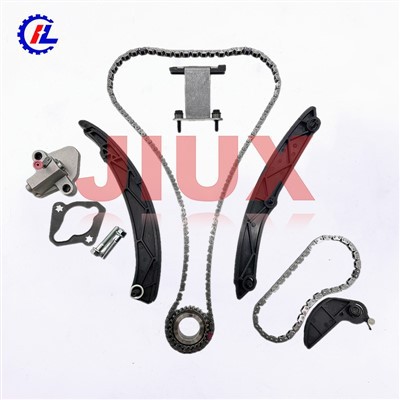
Hey there! I’m a supplier in the timing chain game, and I’ve seen it all when it comes to these crucial engine components. Today, I wanna share with you the different inspection methods for a timing chain. It’s super important because a well – functioning timing chain is the heart of an engine’s operation. Timing Chain
Visual Inspection
Let’s start with the simplest method: visual inspection. You don’t need any fancy tools for this one. All you gotta do is take a good look at the chain. First, check for any signs of wear. If you see that the links are stretched or the pins are loose, it’s a red flag. A stretched chain can cause the engine’s timing to go out of whack, leading to poor performance and potentially serious damage.
Look at the teeth of the sprockets that the chain runs on too. If they’re worn down or have a rough surface, it can cause the chain to skip or make noise. You should also check for any corrosion on the chain. Corrosion weakens the metal and can make the chain break more easily. This is often a problem in engines that are exposed to moisture or harsh environments.
Another thing to look for during visual inspection is the condition of the guides. The guides keep the chain in place, and if they’re cracked or broken, the chain can move around too much. This can lead to the chain hitting other engine parts and causing damage.
Measuring Chain Stretch
Visual inspection is great, but sometimes, you need to get a bit more technical. Measuring chain stretch is one of those technical methods. You’ll need a special tool for this, usually a chain stretch gauge.
To measure the chain stretch, you remove the chain from the engine (or at least enough to get a good measurement). Then, you use the gauge to measure a specific number of links, say, 20 or 30 links. You compare this measurement to the manufacturer’s specifications. If the chain is longer than it should be within that number of links, it’s stretched and needs to be replaced.
Stretch can happen over time due to normal wear and tear, or it can be accelerated by things like poor lubrication or high – stress operating conditions. A stretched chain can cause all sorts of problems, from misfiring to complete engine failure, so it’s important to catch it early.
Checking Tension
The timing chain tension is crucial for its proper operation. There are two main ways to check the tension: static and dynamic.
For static tension checking, you use a tension gauge. You measure the tension at a specific point on the chain when the engine is off. The tension should be within a certain range specified by the manufacturer. If it’s too loose, the chain can rattle and skip, and if it’s too tight, it can put extra stress on the chain and other engine components.
Dynamic tension checking is a bit more complex. You need to use special equipment to measure the tension while the engine is running. This gives you a more accurate picture of how the chain behaves under real – world conditions. A lot of modern engines have automatic tensioners, but they can still fail. If you notice a change in the engine’s performance or a rattling noise, it could be a sign of improper chain tension.
Noise and Vibration Analysis
Engines are noisy places, but some noises are a sign of trouble. Listen carefully to the engine when it’s running. If you hear a rattling or a tapping noise that seems to be coming from the timing chain area, it could be a sign of a loose or worn – out chain.
You can also use vibration analysis. There are vibration sensors that you can attach to the engine block near the timing chain area. These sensors detect abnormal vibrations that could indicate problems with the chain. For example, if the chain is skipping or if there’s a misalignment in the sprockets, it will cause vibrations that the sensors can pick up.
Modern diagnostic tools can analyze these vibrations and even give you an idea of what the problem might be. This is a great way to catch issues early, before they turn into major engine problems.
Wear Particle Analysis
Wear particle analysis is a more advanced inspection method. It involves taking an oil sample from the engine and analyzing the particles in it. The timing chain wears down over time, and these tiny particles end up in the engine oil.
You use a microscope to look at the particles. Different types of wear particles can tell you different things. For example, if you see a lot of metal particles, it could mean that the chain or the sprockets are wearing down too quickly. If you notice any abnormal shapes or sizes of the particles, it could indicate a problem like a crack in the chain.
This method is great because it can detect problems early, even before you can see or hear them. However, it does require some specialized equipment and knowledge, so it’s not something that everyone can do.
Material Hardness Testing
Material hardness testing is another important inspection method. The hardness of the timing chain material affects its durability and performance. If the material is too soft, it will wear down quickly. If it’s too hard, it can be brittle and more likely to break.
To test the hardness, you use a hardness tester. You take a small sample from the chain or, in some cases, you can test the chain in place. The tester measures the resistance of the material to indentation. By comparing the measured hardness to the manufacturer’s specifications, you can determine if the material is within the acceptable range.
If the hardness is off, it could be a sign of a manufacturing defect or improper heat treatment during the production process. This kind of problem can lead to premature chain failure, so it’s important to catch it early.
Compression Testing
Compression testing isn’t directly related to the timing chain, but it can give you clues about its condition. A timing chain that’s out of sync can cause problems with the engine’s compression.
To perform a compression test, you use a compression gauge. You remove the spark plugs and screw the gauge into the spark plug hole. Then, you crank the engine a few times to get a compression reading. You do this for each cylinder.
If you notice a significant difference in compression between cylinders, it could be a sign that the timing chain is misaligned. This misalignment can cause the valves to open and close at the wrong times, leading to poor compression and engine performance.
Why Proper Inspection Matters as a Supplier
As a timing chain supplier, I understand the importance of these inspection methods. We use them to ensure that the chains we produce meet the highest quality standards. By providing our customers with well – inspected and reliable timing chains, we help them avoid costly engine repairs and downtime.

If you’re in the market for timing chains, whether you’re an auto repair shop or a manufacturer, proper inspection is key. You don’t want to end up with a faulty chain that causes problems down the road. That’s why our timing chains go through a rigorous inspection process before they leave our facility.
Fit for HYUNDAI / Kia If you’ve got any questions or you’re interested in purchasing our timing chains, feel free to reach out. We’re always here to help you find the right product for your needs.
References
- "Automotive Engine Repair Manual"
- "Timing Chain Technology Handbook"
- "Engine Diagnostic Guide"
Huzhou Hongli Auto Parts Co., Ltd.
With abundant experience, we are one of the most professional timing chain manufacturers in China. Please rest assured to buy customized timing chain at competitive price from our factory. If you have any enquiry about cooperation, please feel free to email us.
Address: Building 16, No.50 / Building 18, No.58, Dadongwu, Lianshi Town, Nanxun District, Huzhou, Zhejiang, China
E-mail: jiux@timingkit.cn
WebSite: https://www.jiuxkit.com/
