Hey there! I’m a supplier of metal parts, and one question I get asked a lot is, "How do you measure the hardness of metal parts?" Well, let me tell you, it’s not as straightforward as it might seem. There are a bunch of different ways to do it, and each method has its own pros and cons. Metal Parts
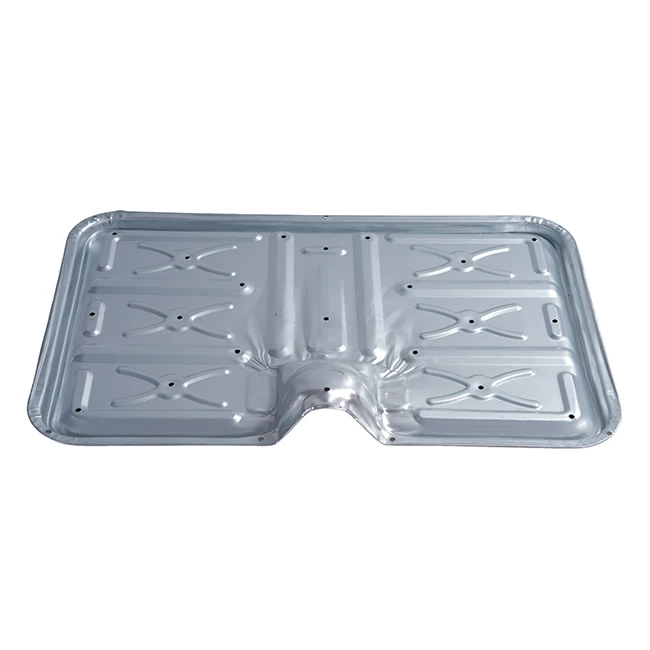
First off, why do we even care about measuring the hardness of metal parts? Well, hardness is a super important property of metals. It can tell us a whole lot about how a metal part is going to perform in different situations. For example, if a part needs to withstand a lot of wear and tear, we want it to be hard. On the other hand, if it needs to be machined easily, we might want it to be a bit softer.
One of the most common methods for measuring the hardness of metal parts is the Brinell hardness test. This test involves pressing a hard, spherical indenter into the surface of the metal part with a specific load. The load is usually applied for a set amount of time, and then the diameter of the indentation left in the metal is measured. The Brinell hardness number (BHN) is then calculated using a formula that takes into account the load and the diameter of the indentation.
The great thing about the Brinell test is that it can be used on a wide variety of metal materials, from soft metals like aluminum to hard metals like steel. It’s also quite accurate and can give a good indication of the overall hardness of a metal part. However, there are a couple of downsides. One is that it leaves a relatively large indentation in the metal, which might not be suitable for parts where the surface finish is important. Another is that it’s a bit time-consuming, especially if you need to take multiple measurements.
Another popular method is the Rockwell hardness test. This test is a bit different from the Brinell test. Instead of using a spherical indenter, it uses a cone-shaped or a ball-shaped indenter. The test involves making two indentations in the metal: a minor load is first applied, and then a major load is added on top of the minor load. The hardness is then determined by measuring the difference in depth between the two indentations.
The Rockwell test is really handy because it’s quick and easy to perform. It also doesn’t leave as large an indentation as the Brinell test, so it’s better for parts where you want to keep the surface finish intact. However, it’s not as accurate as the Brinell test, especially for very hard or very soft metals.
Then there’s the Vickers hardness test. This test uses a diamond indenter in the shape of a square-based pyramid. A load is applied to the indenter, which is then pressed into the metal surface. After the load is removed, the diagonal lengths of the indentation are measured, and the Vickers hardness number (HV) is calculated.
The Vickers test is really precise and can be used on all sorts of metals, including thin foils and small parts. It’s also good for measuring the hardness of different phases within a metal alloy. But, like the Brinell test, it’s a bit time-consuming, and it also requires a high level of skill to perform accurately.
There are also some other methods out there, like the Knoop hardness test, which is similar to the Vickers test but uses a different-shaped indenter, and ultrasonic hardness testing, which measures the hardness based on the ultrasonic velocity in the metal. These methods are less commonly used, but they can be useful in certain situations.
Now, as a metal parts supplier, I use these hardness testing methods all the time to make sure that the parts I’m providing meet the required specifications. Whether it’s a customer who needs a part to be extra hard for a high-wear application or someone who wants a part that’s easy to machine, I can use hardness testing to make sure we’re on the right track.
If you’re in the market for metal parts, it’s really important to pay attention to the hardness. A part that’s too hard might be brittle and prone to cracking, while a part that’s too soft might wear out too quickly. And that’s where I come in! I’ve got the expertise and the equipment to make sure that the metal parts I supply have just the right hardness for your needs.
So, if you’re looking for high-quality metal parts with the perfect hardness, get in touch with me. I’d love to discuss your requirements and see how I can help you get the best parts for your project. Whether it’s a small batch for a prototype or a large-scale production run, I’m here to make sure you get exactly what you need.
Other Plastic Parts References
- Callister, W. D., & Rethwisch, D. G. (2018). Materials Science and Engineering: An Introduction. Wiley.
- Shackelford, J. F. (2019). Introduction to Materials Science for Engineers. Pearson.
Jiangsu Xinhuasheng Packaging New Materials Co., Ltd.
Jiangsu Xinhuasheng Packaging New Materials Co., Ltd. is one of the most professional metal parts manufacturers and suppliers in China, featured by quality products and low price. Please rest assured to wholesale durable metal parts in stock here and get quotation from our factory. Customized orders are welcome.
Address: No. 5 Tieta Road, Industrial Park, Guyang Town, Dantu District, Zhenjiang City, Jiangsu Province, China.
E-mail: manager@jsxhsgs.com
WebSite: https://www.xhsibc.com/
