When I started in the charging management space seven years ago, most operators I worked with cared only about how many cars could plug in at once and how fast the power would flow. Back then, a “good” charging system often boiled down to a reliable unit and a clean user app. Today, after watching the industry evolve from a handful of urban stations to a network that serves suburban parking lots, highway rest stops, and apartment complexes across the country, I know a great charging management system is so much more. As someone who has built charging management tools for that entire time, I’ve seen what works for single-site operators and enterprise fleets alike—and what falls apart when a system doesn’t hit the mark. Charging Management

The first, most non-negotiable feature of any good charging management system is real-time, granular monitoring. Early on, we built a system that let operators see “station online” or “station offline” with a tap, but that only told half the story. Last year, a small grocery chain client came to us frustrated because their downtown fast-charging station would show as operational, but half the time, cars would plug in and get no power. Digging into the data, we found the system was not tracking individual port health: a loose wire on port 3 would mark the whole station as working, because the system only checked if the main power supply was live. A strong management system doesn’t just ping a device every five minutes—it tracks each charging port’s voltage, current, and session status in real time, down to every 15 seconds. That means an operator can open their dashboard on their commute to work and see that port 2 at the highway rest stop is drawing 10% less power than it should, so they can schedule a technician before a long holiday weekend when hundreds of road trippers will be relying on it. We also added text alerts for critical issues—like a port overheating or a payment processing failure—because no one wants to be checking a dashboard every hour. For operators with 10 stations or 1,000, this visibility cuts downtime by as much as 40% in our client data, which directly translates to fewer lost sessions and more revenue.
Next, seamless load management is a make-or-break feature that many early systems skipped. Think about an apartment complex with 20 Level 2 chargers. Five years ago, a developer would install those chargers and hook them up to the grid like any other appliance. But if 10 tenants plug in their Teslas at 7 p.m. on a Tuesday, all drawing maximum power, they’ll blow a building fuse—taking every charger offline for hours, and costing the developer thousands in repairs and bad tenant reviews. A good charging management system solves this by distributing power intelligently, based on what the building’s grid can handle. Our system does this by pulling in data from the property’s electrical panel, weather forecasts, and even upcoming sessions. If a fleet operator needs to charge their 20 delivery vans overnight, the system will prioritize those vans for full power while making sure a few Level 2 ports are left for residents who come home later. We also recently added dynamic load management that works with utility demand response programs. On hot summer afternoons, when the local grid is strained, the system can temporarily reduce charging power by 10% for non-urgent sessions, earning the operator a credit from the utility—no action needed from the user, so they never notice a difference. This feature turns charging from a problem for property managers into a revenue stream.
Payment and user experience integration is another core feature that’s often an afterthought. I’ve heard horror stories from operators who had a great charging network, but their payment system required users to create an account, input a credit card, and wait for a verification text mid-charge. By the time they finished, they were so frustrated they left a one-star review and never came back. A good charging management system supports multiple payment methods without friction: contactless credit cards, Apple Pay, Google Pay, pre-paid accounts for fleet operators, and even subscription plans for regular users. It should also sync seamlessly with popular EV apps and routing tools, like PlugShare or Google Maps, so users can see real-time charger availability, start a session directly from their car’s infotainment screen, and get a receipt sent to their email automatically. For operators, this means less abandoned sessions and lower processing fees, because we integrate directly with major payment processors rather than forcing operators to use a clunky third-party tool. We also built a transparent pricing engine that lets operators set different rates for peak times, off-peak times, and loyalty users, all in one dashboard—no coding required, even for operators with no technical background.
Scalability is a feature that sounds simple, but I’ve seen too many small operators outgrow their first charging system in less than two years. A coffee shop that starts with two Level 2 chargers might add five more next year, then 20 when they expand their outdoor patio. A school district that starts with 10 chargers for its admin fleet might need 100 when it transitions its bus fleet to electric. A good charging management system should grow with the operator, without requiring a full hardware replacement or a costly system upgrade. Our cloud-based system is built to add new stations in minutes, not weeks. If an operator wants to add a fast-charging station at a new retail location, we just send them a small device that plugs into the charger’s network, and they can connect it to their existing dashboard in an afternoon—no new server, no new training. We also support different types of chargers from any manufacturer, so operators aren’t locked into one brand. That’s a big one: being able to mix and match chargers from ABB, Siemens, Tesla, or any other brand means operators can choose the best hardware for their location, not what the charging system vendor forces them to use.
Data analytics and reporting are the feature that turns a charging management system into a strategic tool, not just a way to run sessions. Early on, operators would ask us for a spreadsheet of how many sessions they ran that month, and we’d send them a messy CSV file that took hours to organize. Today, a good system turns raw data into actionable insights. Our dashboard generates reports on session length, energy usage, revenue per station, peak usage times, and even user demographics. For a retail center operator, this might mean noticing that 70% of users are shopping at the grocery store next door, so they can run a promotion: “Charge here and get 10% off at the grocery store.” For a fleet operator, the data might show that delivery vans that charge between 10 p.m. and 5 a.m. use 15% less energy, so they can adjust their drivers’ schedules to save on electricity costs. We also built custom reporting tools, so enterprise clients can pull data that fits their own accounting or sustainability goals—like tracking how many tons of CO2 they’re avoiding by using EVs, or generating reports for investors who want to see the network’s growth. The best part is that this data is all integrated, so an operator doesn’t have to jump between 10 different tools to get a full picture of their business.
Cybersecurity is a feature that most operators don’t think about until it’s too late. Two years ago, a small charging network in the Midwest was hit by a ransomware attack that locked their entire management system, taking all 12 of their stations offline for three days. The operator lost thousands in revenue, and many users never came back. A good charging management system is built with security as a foundation, not an add-on. We use end-to-end encryption for all data transfers between the charger, the user’s phone, and our cloud servers. We update the system automatically to patch vulnerabilities, so operators don’t have to worry about manual updates. We also use role-based access, so a part-time site manager can only see their local stations, while the main office can see the whole network, and no one can change pricing settings without approval. For operators handling sensitive user data, like payment information, we are PCI compliant, and we work with clients to meet local data privacy regulations, like GDPR or CCPA. Cyber attacks are only going to get more common as EV adoption grows, so this isn’t a “nice to have” feature—it’s a requirement for any charging system that operators can trust.
After working with hundreds of operators over the years, I’ve learned that a great charging management system isn’t about having every fancy feature. It’s about solving real problems that operators face every day: keeping stations online, making the grid work, getting paid on time, growing without stress, and protecting their business. Early in my career, I thought the goal was to build a system that could do everything, but now I know the best systems are the ones that adapt to the operator’s needs, not the other way around. A small coffee shop doesn’t need the same advanced load management as a 500-station highway network, but both need real-time monitoring, easy payments, and reliable security.
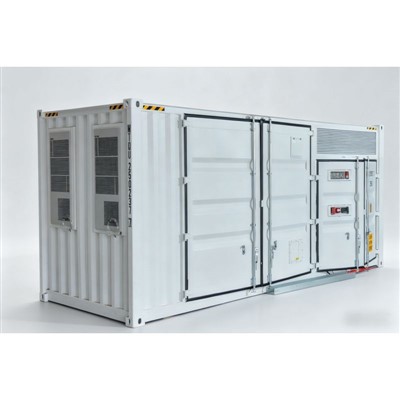
If you’re an operator, property manager, or fleet manager looking to upgrade or launch a charging network, the right charging management system can make the difference between a profitable, smooth-running operation and a headache that takes up all your time. I’ve seen first-hand how a good system can turn a set of chargers into a service that users love, and that drives consistent revenue.
Solar DC Cable References
- International Energy Agency. (2023). Global EV Outlook 2023: Charging Infrastructure Projections.
- U.S. Department of Energy. (2022). Load Management Strategies for Electric Vehicle Charging Networks.
- PCI Security Standards Council. (2023). Payment Card Industry Data Security Standard for Connected Devices.
- Electric Power Research Institute. (2022). Demand Response Opportunities for Commercial EV Charging Operators.
- National Electric Manufacturers Association. (2023). Scalability Considerations for EV Charging Management Systems.
Tianjin Xilingke New Energy Technology Co., Ltd.
Address: Suite 2601, Tower B, Wanghai International, Haihe East Road, Hebei District, Tianjin, China.
E-mail: robin@sinelinkev.com
WebSite: https://www.sinelinkenergy.com/
