If you’ve ever spent 10 minutes twisting a stubborn screw into a power strip or stared at a wobbly shelf and wondered, “Why does this tiny metal part hold so much, yet sometimes slip like it’s got butter on the threads?” — you’re basically asking the question that keeps me up at night as a screw connector supplier. I’ve been working with these things for 12 years, and I can’t tell you how many times a customer will call me panicking because a $0.50 connector failed on a $10,000 machine part. Most of the time, it’s not that the screw was garbage — it’s that no one stopped to think about what “mechanical strength” even means for these little guys, beyond how hard you can crank a screwdriver. Screw Connector
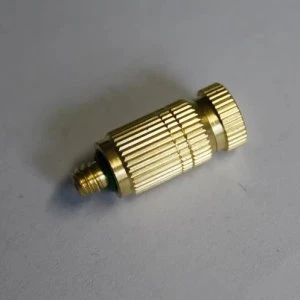
Let’s start with the basics, no jargon I had to memorize for a 2019 trade show. When people say “mechanical strength of a screw connector,” they’re not talking about how tough the screw’s head is (though that matters too, if you’re using a electric drill that slips). It’s three main things rolled into one: how much it can resist pulling straight out (that’s called withdrawal strength, for the nerds), how much torque it can take before the threads strip (strip torque, duh), and how much shear force it can handle if something sideways tries to yank it apart. Most suppliers will brag about one of these numbers, but you need all three, right? My team gets 50 calls a month from contractors or manufacturers who picked a connector that’s great for torque but terrible if there’s any side pressure, and now they’re reworking a whole line of products.
Let’s break each down like I’m explaining it to my 16-year-old intern who thought screws were just for hanging posters. Withdrawal strength: Think of it as the “stickiness” between the screw’s threads and the material it’s screwed into. If you’re attaching a screw to wood, that stickiness comes from the wood fibers wrapping around the threads. If it’s plastic, it’s the plastic melting a little when the screw goes in and hardening around the threads. For metal? Wait, no — most screw connectors we supply aren’t for two metal pieces (that’s a bolt and nut, different beast) — they’re for joining a screw to wood, drywall, plastic, or even concrete sometimes. The big mistake here is picking a screw with too fine or too coarse threads for the material. We once had a guy buy our #8 fine-thread screws for 2×4 lumber, and they pulled out of the edge like they were in butter. Fine threads are great for thin metal or plastic, but for thick, soft wood, you need coarse threads with deeper grooves to dig in. It sounds obvious, but you’d be shocked how many people just grab the first screw in the bin.
Next, strip torque. That’s the amount of twist force you can apply before the screw’s threads get chewed up, either from the screw itself or the material it’s in. I’ve seen this happen when someone uses a 12-volt drill set to maximum torque on a #6 drywall screw — boom, threads stripped before the screw even got all the way in. Or worse, when someone uses a cheap screw that’s made with thin, soft metal (we call that “dead soft” stock, and we refuse to carry it) — their threads strip mid-install, and now you’ve got to patch three holes. The material of the screw matters here, too. We use a medium-carbon steel for most of our standard connectors, because it’s strong but still easy to thread. For higher-torque applications, we go with a heat-treated alloy steel — that’s what we sell to the guys installing heavy farm equipment, because those screws get cranked on hard. Pro tip I learned from a construction foreman back in 2017: always use a screwdriver or drill bit that’s the exact size of the screw head. A cheap drill bit that’s slightly too small will cam out, slip, and mess up the head before you even get to the strip torque limit. That’s 90% of the strip failures we see, not bad screws.
Shear strength is the third, and most misunderstood, part. Shear is when force is applied sideways, not straight out. Like, if you’ve got a shelf bracket with a screw going into a stud, and someone shoves a 50-pound bag of dog food onto it — that’s shear force pulling the screw sideways. I can’t tell you how many people only check withdrawal strength and forget shear, and then their shelf collapses. Shear strength depends a lot on how many threads are engaged. If you screw a screw half an inch into a stud, it has half the shear strength of one screwed in an inch. We always tell our customers to go for at least 1.5 times the screw’s diameter into solid material for shear. For example, a ¼-inch screw should be sunk at least ⅜-inch deep. A lot of contractors cut corners here, because it takes an extra 10 seconds, but that 10 seconds is the difference between a shelf holding and a trip to the ER.
Wait, let’s get real — not all screw connectors are the same. I’ve had customers ask for “the strongest screw on the market,” and I have to tell them it’s not one-size-fits-all. For example, our standard zinc-plated screw connectors have a withdrawal strength of about 1,200 pounds in soft pine, strip torque of 25 inch-pounds, and shear strength of about 800 pounds. That’s great for most residential projects — shelf brackets, door hinges, deck boards. But if you’re working on industrial equipment, like a conveyor belt that’s vibrating all day (vibration is a huge killer of screw strength, by the way — it loosens them over time, even if you cranked them on tight), you’d want our galvanized heavy-duty connectors, which have a withdrawal strength of 1,800 pounds in pine, strip torque of 45 inch-pounds, and shear strength of 1,200 pounds. Those numbers aren’t made up, either — we test every batch before it leaves our warehouse. We run withdrawal tests by pulling the screw with a load cell until it slips, strip tests by twisting it with a calibrated torque wrench until the threads mess up, and shear tests by using a hydraulic press to push sideways on the screw until it breaks. I’ve seen so many suppliers pull numbers out of thin air, but we post all our test data for every product on our portal, because I trust my products.
Another thing that affects mechanical strength that most people don’t talk about: surface finish and thread design. We use rolled threads for most of our connectors, not cut threads. Rolled threads are made by rolling the steel into shape, which compresses the metal fibers along the threads — that makes them way stronger than cut threads, which leave tiny stress points that can break. It’s a more expensive process, but I’d rather charge a little more for a screw that doesn’t fail than have a customer call me at 2 a.m. mad that their project fell apart. The surface finish matters for corrosion, too — if a screw rusts, the metal gets brittle, so its strength drops by 30% or more. That’s why we use zinc plating for standard, and hot-dip galvanizing for outdoor or marine use. I learned that the hard way in 2020, when a contractor used our standard zinc screws on a dock and they all rusted in a year. We immediately updated our product info to specify where each finish should be used, and now that doesn’t happen anymore.
Wait, let’s address the big myth: tightening a screw as hard as you can makes it stronger. That’s the opposite of true. If you exceed the strip torque, you destroy the threads, and now the screw is weaker than if you had tightened it to 70% of its strip torque. That’s the “preload” force, right? The tension in the screw that keeps it from loosening. We always tell customers to use a torque wrench, not just muscle, because it takes the guesswork out. For example, our standard #8 screw has a recommended preload torque of 17.5 inch-pounds — that’s 70% of its 25 inch-pound strip torque. Tighten it harder than that, and you risk stripping or snapping the screw. I’ve seen guys snap a bolt head in half because they thought more torque = more strength. Spoiler: it doesn’t.
Now, what about real-world failures? Last year, we had a client who made outdoor patio furniture using our medium-duty screws. They started getting calls from customers saying the armrests were wobbly. We went out to test the furniture, and found that the screws had loosened over time from wind and vibration — not because they were weak. The problem was that the client didn’t know that even a screw with high static strength (the strength when you first install it) can lose strength over time from dynamic forces like vibration. We recommended they add a small amount of thread locker, or switch to our serrated flange screws that dig into the material to prevent loosening, and their failure rate dropped by 95%. That’s the other part of mechanical strength: not just what it can do when new, but how it holds up over time.
Look, I get it. When you’re buying screws, you just grab the cheapest pack at the hardware store, right? I used to do that too, until I had a shelf collapse and break my vintage coffee mug collection. Now I know that the mechanical strength of a screw connector isn’t just a number on a box — it’s what keeps your furniture from falling, your equipment from breaking, your dock from rotting away. As a supplier, my job isn’t just to sell you screws. It’s to help you pick the right one for your job, so you don’t have to deal with a frustrating failure down the line. If you’re working on a project, big or small, and you have questions about which screw connector will hold up, hit us up to chat. We can walk you through the test data, the thread designs, everything you need to make sure your job lasts.

Don’t waste time guessing, or grabbing the cheapest option. Let’s make sure your screws are strong enough to do the job right.
High Pressure Misting Nozzles References:
- Berman, B. (2018). Mechanical Fasteners: Technology, Properties, and Applications. Industrial Press.
- American Society of Mechanical Engineers (ASME). (2021). ASME B18.2.1: Square and Hex Bolts and Screws.
- Wood Handbook: Wood as an Engineering Material. (2020). U.S. Department of Agriculture Forest Service.
- Shigley, J. E., & Mischke, C. R. (2020). Mechanical Engineering Design (11th ed.). McGraw-Hill.
Zhuji Haihang Misting Equipment Co., Ltd.
Zhuji Haihang Misting Equipment Co., Ltd. is well-known as one of the leading screw connector manufacturers and suppliers in China. We warmly welcome you to buy high quality screw connector for sale here from our factory. For more information, contact us now.
Address: No.462 Zhongyang Rd., Diankou Town, Zhuji City, Zhejiang Province, China
E-mail: info@hmisting.com
WebSite: https://www.hmistingsystem.com/
