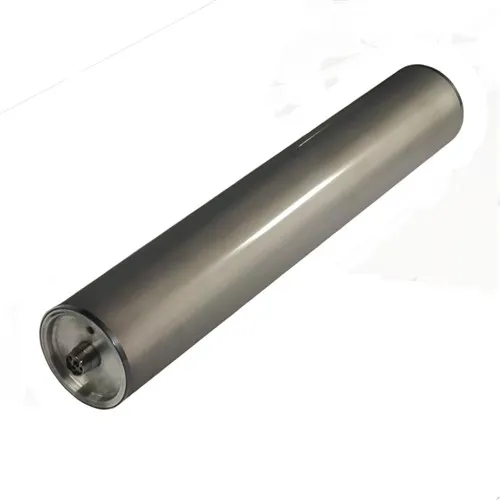
When it comes to the world of printing, especially in industries that rely on precise and high – quality results, ceramic anilox rollers play a pivotal role. As a supplier of ceramic anilox rollers, I often get asked about the most suitable printing speed for these components. This question is crucial because the printing speed can significantly impact the quality of the print, the lifespan of the roller, and the overall efficiency of the printing process. Ceramic Anilox Roller
Understanding the Basics of Ceramic Anilox Rollers
Before delving into the ideal printing speed, it’s essential to understand what ceramic anilox rollers are and how they work. Ceramic anilox rollers are precision – engineered cylinders with microscopic cells engraved on their surface. These cells are designed to hold and transfer a specific amount of ink or coating to the printing substrate. The ceramic coating on these rollers provides excellent hardness, wear resistance, and chemical resistance, making them suitable for a wide range of printing applications, including flexography, gravure, and offset printing.
The performance of a ceramic anilox roller is determined by several factors, such as the cell geometry (cell size, shape, and depth), the roller’s surface finish, and of course, the printing speed. Each of these factors interacts with one another to affect the ink transfer and the final print quality.
Factors Affecting the Suitable Printing Speed
Ink Viscosity
Ink viscosity is one of the primary factors that influence the suitable printing speed for a ceramic anilox roller. Viscosity refers to the thickness or resistance to flow of the ink. High – viscosity inks are thicker and flow less easily compared to low – viscosity inks.
When using high – viscosity inks, a slower printing speed is generally recommended. At lower speeds, the ink has more time to fill the anilox cells properly and be transferred evenly to the substrate. If the printing speed is too high, the high – viscosity ink may not be able to enter the cells fully, resulting in inconsistent ink transfer and poor print quality.
Conversely, for low – viscosity inks, a higher printing speed can be used. The low – viscosity ink can flow more easily into the cells and be transferred quickly to the substrate. However, even with low – viscosity inks, there is an upper limit to the printing speed. If the speed is too high, the ink may be ejected from the cells prematurely, leading to ink splatter and uneven printing.
Print Quality Requirements
The level of print quality required also determines the appropriate printing speed. In applications where high – resolution and detailed prints are necessary, such as in packaging for high – end consumer products or in – label printing, a slower printing speed is usually preferred.
A slower speed allows for more precise ink transfer and better control over the printing process. It gives the ink more time to make contact with the substrate and ensures that the tiny details of the print are accurately reproduced. In contrast, for less demanding printing jobs, such as some types of industrial or non – critical commercial printing, a higher printing speed can be used to increase productivity without sacrificing too much print quality.
Substrate Type
The type of substrate being printed on is another important factor. Different substrates have different surface characteristics, such as porosity, smoothness, and absorbency.
For porous substrates, like some types of paper or cardboard, a higher printing speed may be acceptable. The pores in the substrate can absorb the ink quickly, allowing for faster ink transfer. However, if the speed is too high, the ink may not have enough time to spread evenly on the surface, resulting in a blotchy or uneven print.
On the other hand, smooth and non – absorbent substrates, such as plastic films or glass, require a more careful approach. A slower printing speed is often necessary to ensure that the ink adheres properly to the surface and forms a uniform layer. If the speed is too high, the ink may not bond well with the substrate, leading to poor adhesion and a short – lived print.
Determining the Ideal Printing Speed Range
Based on our experience as a ceramic anilox roller supplier and feedback from our customers, the ideal printing speed range can vary significantly depending on the above – mentioned factors.
In general, for applications with high – viscosity inks, fine – detailed prints, and challenging substrates, printing speeds can range from 50 to 200 meters per minute (m/min). This slower speed range allows for better control over the ink transfer process and ensures high – quality prints.
For less demanding applications, such as printing with low – viscosity inks on porous substrates, the printing speed can be increased to between 300 and 600 m/min. At these higher speeds, printers can achieve greater productivity while still maintaining an acceptable level of print quality.
However, it’s important to note that these are just rough guidelines. Every printing setup is unique, and the ideal printing speed for a specific ceramic anilox roller should be determined through a series of tests and adjustments.
The Impact of Printing Speed on Roller Lifespan
The printing speed also has a significant impact on the lifespan of the ceramic anilox roller. When the printing speed is too high, there is increased mechanical stress on the roller. The rapid movement of the roller in contact with the ink fountain, doctor blade, and substrate can cause accelerated wear and tear on the ceramic coating.
Moreover, at high speeds, there is a higher risk of ink spatter and debris buildup around the roller. This can lead to scratching of the ceramic surface and a reduction in the roller’s performance over time.
On the other hand, if the printing speed is too low, the ink may dry inside the cells, causing blockages. This not only affects the print quality but also requires more frequent cleaning and maintenance of the roller, which can also shorten its lifespan.
Finding the Optimal Printing Speed for Your Application
Finding the optimal printing speed for a ceramic anilox roller is a process of trial and error. Here are some steps that can help you:
Initial Setup
Start by consulting the specifications provided by the roller manufacturer. These specifications often include recommended speed ranges based on the roller’s cell structure and coating type.
First Tests
Conduct initial test runs at a moderate speed within the recommended range. Monitor the print quality closely, checking for factors such as ink coverage, color consistency, and sharpness of details.
Gradual Adjustments
Make small adjustments to the printing speed, either increasing or decreasing it, and observe the changes in print quality. Keep a record of the speed settings and the corresponding print results.
Consider Other Variables
Remember to consider other variables, such as ink viscosity, substrate type, and the condition of the printing equipment. These factors can also influence the relationship between printing speed and print quality.
Conclusion
In conclusion, determining the suitable printing speed for a ceramic anilox roller is a complex process that involves considering multiple factors, including ink viscosity, print quality requirements, and substrate type. While there are general guidelines for speed ranges, the optimal speed for any given application should be found through a careful process of testing and adjustment.
Ceramic Anilox Roller As a supplier of ceramic anilox rollers, we understand the importance of achieving the perfect balance between printing speed and quality. Our team of experts is always ready to provide guidance and support to help you get the most out of your ceramic anilox rollers. If you are looking to improve your printing process, enhance print quality, or simply want to learn more about our products, we encourage you to get in touch with us for a consultation. We are eager to discuss your specific needs and find the best solutions for your business.
References
- "Flexographic Printing Technology" by Jesse Fields
- "Gravure Printing Processes" by Karl P. Cohen
- Industry reports on ceramic anilox roller performance from leading printing associations
Kunshan Hanhan Co., Ltd.
We’re well-known as one of the leading ceramic anilox roller manufacturers and suppliers in China. We warmly welcome you to buy high quality ceramic anilox roller made in China here from our factory. If you have any enquiry about cooperation, please feel free to email us.
Address: No. 1093, B Zone, No. 2 Xugongqiao Rd, Huaqiao Town, Kunshan City, Suzhou, Jiangsu, China
E-mail: info@kshhroller.com
WebSite: https://www.kshh-roller.com/
