Hey there! I’m an SLS Printing provider, and I often get asked, "Can SLS Printing be used for mass production?" It’s a great question, and today, I’m gonna break it all down for ya. SLS Printing
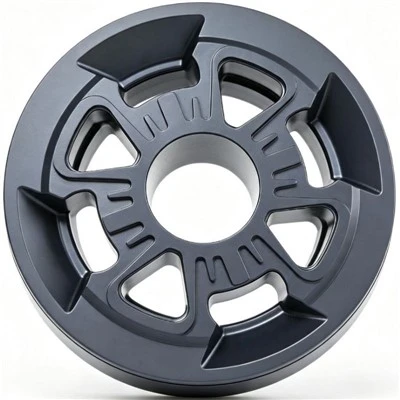
Let’s first talk about what SLS Printing is. Selective Laser Sintering, or SLS for short, is an additive manufacturing technique. It uses a high – power laser to fuse small particles of polymer powder together, layer by layer, to create a 3D object. It’s known for its ability to produce complex geometries that are often difficult or impossible to achieve with traditional manufacturing methods.
Now, when it comes to mass production, traditionally, injection molding has been the go – to method. It’s fast, relatively inexpensive per unit once the mold is made, and can produce high – volumes of identical parts. But here’s where SLS Printing starts to shine.
One of the biggest advantages of SLS Printing for mass production is its flexibility. With injection molding, you need to create a custom mold for each part design. This process can be time – consuming and expensive, especially for prototypes or small – batch production. If you want to make a change to the design, you have to go through the whole mold – making process again.
On the other hand, with SLS Printing, changing the design is as easy as tweaking a 3D model on your computer. You can quickly produce different versions of a product, which is super useful for companies that are constantly innovating and updating their product lines. For example, a tech startup that wants to test different iterations of a smartphone case can print out a variety of designs without having to invest in multiple injection molds.
Another thing is the ability to produce complex parts. SLS Printing doesn’t rely on the use of molds, so it can create parts with internal structures, undercuts, and other intricate details that would be very challenging or impossible to make with injection molding. This is a huge plus for industries like aerospace and medical, where highly customized and complex parts are often required.
Let’s talk about material options. SLS Printing supports a wide range of materials, including various types of plastics, composites, and even some metals. This means that depending on the requirements of your product, you can choose the most suitable material. For products that need to be lightweight and durable, you might opt for a nylon – based material. If you need a part with high heat resistance, there are also materials available that can meet those needs.
However, it’s not all sunshine and rainbows when it comes to using SLS Printing for mass production. One of the main drawbacks is the speed. Injection molding can produce parts much faster than SLS Printing. The laser in an SLS printer needs to scan and sinter each layer of powder, which takes time, especially for large or complex parts. So, if you’re looking to produce millions of units in a short period, SLS Printing might not be the most efficient option on its own.
Cost is another factor. Although SLS Printing doesn’t require expensive molds, the cost per unit can still be relatively high compared to injection molding, especially for large – volume production. The raw materials used in SLS Printing can be pricey, and the energy consumption of the printers is also something to consider.
But don’t let these drawbacks discourage you. There are ways to make SLS Printing more viable for mass production. For instance, by optimizing the production process. You can group multiple parts together in the build chamber to maximize the use of the available space. This way, you can print more parts at the same time, reducing the overall production time and cost per unit.
Also, as technology advances, SLS printers are becoming more efficient. Newer models are able to print faster and with higher precision. The cost of materials is also gradually coming down as more companies enter the market and competition increases.
In some cases, a hybrid approach might be the best solution. You can use SLS Printing for the initial prototyping and small – batch production to test the market and get feedback. Once you’re confident in the product design and there’s enough demand, you can switch to injection molding for large – scale production.
I’ve seen many success stories where companies have used SLS Printing for mass production. A small – to – medium – sized business that produces custom – made jewelry, for example. They use SLS Printing to create unique designs that are difficult to replicate with traditional methods. By leveraging the flexibility of SLS Printing, they can offer a wide range of products to their customers, which has helped them stand out in a crowded market.
In the automotive industry, some manufacturers are using SLS Printing to produce low – volume, high – performance parts. These parts are often customized for specific vehicle models or racing applications. The ability to create complex geometries with SLS Printing allows for better performance and lighter weight, which is crucial in the automotive world.
So, to answer the question, "Can SLS Printing be used for mass production?" The answer is yes, but it depends on your specific needs. If you need high – volume, identical parts in a short time frame and cost is a major concern, traditional methods like injection molding might still be the way to go. But if you value flexibility, the ability to produce complex designs, and quick design changes, SLS Printing can be a great option for mass production, either on its own or in combination with other manufacturing techniques.
If you’re interested in exploring how SLS Printing can fit into your mass – production needs, I’d love to have a chat with you. Whether you’re a startup looking to test the waters or an established company looking to innovate, we can work together to find the best solution for your business. Reach out to me, and let’s start a conversation about how SLS Printing can take your production to the next level.
Metal Printing References
- Gibson, I., Rosen, D. W., & Stucker, B. (2010). Additive Manufacturing Technologies: Rapid Prototyping to Direct Digital Manufacturing. Springer.
- Wohlers, T. (2022). Wohlers Report 2022: 3D Printing and Additive Manufacturing State of the Industry. Wohlers Associates.
Dongguan Xinchuan Precision Manufacturing Co., Ltd.
As one of the most professional sls printing manufacturers and suppliers in China, we offer a quick lead time for customized orders. Please feel free to buy precision sls printing made in China here from our factory. Contact us for quotation.
Address: #16 Gangjian Road, Changping Town, Dongguan City, Guangdong, China. 523000
E-mail: FreeQuote@xcprecision.com
WebSite: https://www.xcprecisions.com/
