Hey everyone, thanks for hanging out on the blog today. I’m gonna keep this real—no stuffy industry jargon, no bullet points that make your eyes cross, just the straight talk about something we talk about every single day here at the shop: enamel wire insulation resistance. If you’ve ever ordered wire for motors, transformers, or even that random little electronic project you’re tinkering with, you’ve probably heard this term thrown around. Most folks either glaze over it (pun totally intended) or have no clue why it even matters. Let’s break it down like we’re chatting over coffee, yeah? Enamel Wire
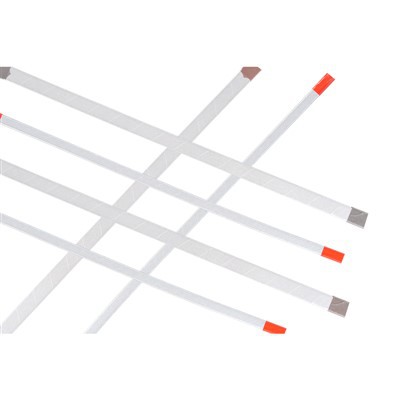
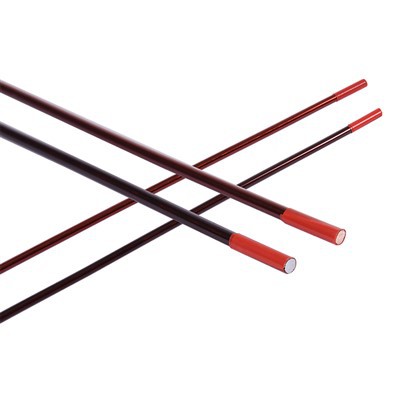
First off, let’s make sure we’re all on the same page about what enamel wire is, just in case you’re new to the game. It’s that thin, copper (or sometimes aluminum) wire wrapped in a super thin layer of enamel—usually polyimide, polyurethane, or polyester, depending on the job. That enamel isn’t just a pretty coat; it’s the insulating barrier that keeps the current stuck to the wire, where it’s supposed to be. Without it, electricity would leak everywhere, short out circuits, and turn whatever you’re building into a paperweight (or worse, a fire hazard). Now, insulation resistance is the number that tells you how well that enamel is doing its job.
Wait, hold up—let’s not mix up insulation resistance with conductivity, okay? Conductivity is how easily current flows through the wire itself (that’s the copper part, we want that high). Insulation resistance is the exact opposite: how hard it is for current to jump from one wire to another, or from the wire to whatever’s around it. Think of it like your rain jacket: conductivity is how well the jacket lets your body heat escape, while insulation resistance is how well it keeps rain (or, in this case, electricity) out. You want your rain jacket to block water, not let it seep through—same with enamel wire.
Now, I know what you’re thinking: “How do you actually measure this stuff?” It’s not like pulling out a ruler or a multimeter and checking length. We use a tool called a megohmmeter (or “megger,” for short—everyone calls it that, even the engineers). The megger pumps a tiny, controlled voltage through the wire’s insulation, then measures how much current leaks through. The higher the resistance (measured in megohms, MΩ—again, don’t overthink the unit, just know it’s a big number), the better the insulation is doing its job. For enamel wire, this number isn’t just random; it depends on a bunch of factors that I see affect our stock every single day.
Let’s talk about those factors, because this is where it gets real for anyone ordering wire. First up: the thickness of the enamel coating. Makes sense, right? A thicker layer of insulation means more distance for electricity to have to jump, so higher resistance. But here’s the catch—you can’t just slather on a mile of enamel because the wire’s got to fit tight in motors and transformers. We’re talking microns here, people—like, thinner than a human hair. So manufacturers have to balance thickness with flexibility, and that’s why different grades of enamel exist. We stock a range, from super thin ones for small coils to thicker stuff for high-voltage applications, and each has a set insulation resistance spec that we test before it leaves our warehouse.
Next big one: temperature. Enamel’s not invincible, y’all. If it gets too hot, that polymer coating starts to break down—think of how your old plastic phone cord gets all brittle and crackly after years of use. Same thing here. The insulation resistance drops as temp goes up. For example, polyurethane enamel might have a resistance of, say, 10,000 MΩ at room temp, but crank that up to 150°C and it could plummet to 1,000 MΩ. Polyimide? Way better at high temps—stays tough up to 250°C, so its resistance barely drops. That’s why we make sure to tell every customer exactly which grade to use for their application: if it’s going inside a car engine or a industrial oven, we’re sending polyimide, no exceptions. We’ve seen what happens when someone uses the wrong stuff—motors short out mid-shift, transformers overheat, and we get panicked calls at 2 a.m. Trust me, we don’t want that, and neither do our clients.
Moisture and chemicals too. Enamel’s pretty resistant to most things, but if it gets soaked in water or exposed to harsh chemicals (like oil, solvents, or even some cleaning agents), that can eat away at the coating. Water is conductive, so if it gets into tiny scratches or pinholes in the enamel, it creates a path for current to leak. I had a client last year who ordered wire for a marine pump—they used our standard polyester enamel, and after a month in salt water, the insulation resistance dropped so low the pump shorted. We swapped them to a moisture-resistant polyamide enamel, and they haven’t had an issue since. That’s exactly why we ask so many questions when you reach out: where’s this wire going? What’s it gonna be exposed to? We don’t just sell wire—we solve problems.
Age too. Even if you store enamel wire perfectly, it’s not gonna last forever. The enamel slowly degrades over time, especially if it’s exposed to UV light (don’t store your wire in a sunlit garage, people!). We recommend using wire within 2 years of production, and we print the production date on every spool just for that reason. We test the insulation resistance on every batch when it arrives, and again before it ships, so you don’t get old, degraded wire that’s gonna cause you headaches.
Now, let’s get to the part that matters most for anyone buying enamel wire: why does insulation resistance even matter to you? Like, if you’re just a hobbyist building a small LED circuit, maybe you don’t need to stress over 1,000 vs 10,000 MΩ. But if you’re building a 100-horsepower motor for a factory, or a transformer for a power plant? That number is non-negotiable. Too low, and you get current leakage, which wastes energy, creates heat, and can even cause fires. I’ve seen a workshop burn down because someone used wire with insufficient insulation resistance for a high-voltage coil—total disaster, all because they cut corners on the spec.
For our business, this is non-negotiable. Every single spool of enamel wire we sell goes through a insulation resistance test before it leaves our warehouse. We don’t cut corners here. Our quality team runs random samples from every batch, tests them at room temp, and at the max temp the wire’s rated for, and even runs humidity tests to make sure it holds up. We keep records of every test for 5 years, so if you ever have an issue, we can look back and see exactly what the resistance was when it shipped. That’s the kind of accountability you don’t get from every supplier—trust me, I’ve heard horror stories from clients who bought cheap wire from overseas, no test records, no way to prove it was good.
Wait, let’s clear up a common myth, too. A lot of people think “thicker wire = higher insulation resistance.” Nope! The insulation is the same thickness regardless of the copper core. The core thickness affects how much current can flow, but the insulation resistance is all about the enamel, its quality, and how it’s applied. We’ve got 24-gauge wire and 10-gauge wire with the same enamel grade, same insulation resistance spec—just different amounts of copper inside. That’s a mistake a lot of new folks make, so don’t fall for it.
Another thing: pinholes. Even a tiny pinhole in the enamel (like, smaller than a grain of sand) can kill insulation resistance. When we apply the enamel, we do it in multiple thin layers, then bake them, to make sure there’s no gaps. But sometimes, during shipping or handling, a spool can get a tiny scratch on the coating. That’s why we recommend handling wire carefully, and when you’re stripping the enamel to solder it, use the right tool—don’t scrape it with a knife, that can create more pinholes. We sell stripping tools too, by the way, if you need ‘em—just saying.
Now, let’s talk real-world examples so this isn’t just textbook stuff. Last quarter, we had a client who makes small electric motors for drones. They were using a competitor’s wire, and their motors were failing at a rate of 1 in 20. They came to us frustrated, because they couldn’t figure out why. We tested a sample of their wire, and found its insulation resistance was 30% lower than the spec they needed—turns out the competitor was cutting the enamel layer thin to save money, leading to more pinholes and lower resistance. We sent them our standard grade motor wire, which has a consistent 15,000 MΩ insulation resistance at room temp, and their failure rate dropped to less than 1 in 500. That’s the difference between knowing your product and cutting corners.
Another client: a guy who restores old radios. He was using wire from a hardware store, which he said “seemed fine,” but his radios would have static and weak signal. Turns out the hardware store wire was made for house wiring, not for coils in radio circuits—its insulation was too thick, making the coils too bulky, but more importantly, its insulation resistance was all over the place, some spools good, some bad. We sent him our fine-enamel magnet wire, which has a uniform, thin enamel layer with consistent insulation resistance, and his radios started sounding as good as new. Small projects need good insulation too, y’all.
So, what should you actually look for when buying enamel wire related to insulation resistance? First, check the grade: make sure it’s rated for the temperature and environment your project will be in. Second, ask the supplier for test data—any reputable supplier should be able to send you the insulation resistance specs for their wire, including at operating temps. Third, don’t buy super cheap wire without checking reviews or specs—if the price seems too good to be true, the insulation is probably too thin or low quality. Fourth, store it properly—dry, cool place, away from direct sunlight, so the enamel doesn’t degrade before you use it.
Here’s the thing: we’ve been in this game for over 10 years, and insulation resistance is still one of the most important things we check for every single day. It’s not a number that sits on a spec sheet—it’s what keeps your projects working safely, efficiently, and without failure. We’ve built our business on being transparent about this stuff—no hiding bad test data, no selling wire that doesn’t meet the numbers we promise. If you’re not sure what insulation resistance you need for your specific project, just shoot us a message. We’ll ask you a few quick questions (what’s the wire for, what temp will it be in, any exposure to moisture or chemicals) and point you exactly to the right wire. We don’t just want to sell you a spool—we want you to have a successful project.
At the end of the day, enamel wire insulation resistance is way more important than most people realize, until they have a problem. It’s the unsung hero of every motor, transformer, radio, and drone out there. Don’t overlook it, and don’t trust your project to a supplier who doesn’t take it seriously. If you’re looking for reliable enamel wire with consistent, tested insulation resistance, we’re here to help. Hit us up to chat through your project, ask questions, or get a quote—we’re always down to help, no matter how big or small your order is.
Flat Wire Winding References
- Enameled Magnet Wires: Properties and Applications, National Electrical Manufacturers Association (NEMA)
- Insulation Resistance Testing Procedures for Magnet Wire, Underwriters Laboratories (UL)
- Thermal Degradation of Enamel Insulation in Electrical Wires, Institute of Electrical and Electronics Engineers (IEEE) Transactions on Dielectrics and Electrical Insulation
- Environmental Effects on Enameled Wire Insulation Resistance, International Electrotechnical Commission (IEC) Standard 60317
Tianjin Jingwei Power Technology Co., Ltd.
As one of the most professional enamel wire manufacturers and suppliers in China, we’re featured by quality products and good service. Please rest assured to buy durable enamel wire made in China here from our factory. Contact us for more details.
Address: No.1 Chuangxin Rd. Xiaozhan Industrial Park, Jinnan District, Tianjin, China
E-mail: info@jwdc.cn
WebSite: https://www.jw-dcs.com/
