If you’ve ever stopped to examine a pair of sleek, lightweight eyeglass frames or a pair of durable sports sunglasses that sits comfortably on your face for hours, you’ve held in your hands the end product of optical frame injection molding—a process that’s equal parts engineering precision and material science. As a supplier of optical frame injection molding machines, I get dozens of questions every week from new clients: “What exactly is injection pressure, and why does it matter so much for frames that need to be both flexible and shatter-resistant?” Let’s break this down, not with overly jargon-heavy textbook terms, but with real-world context that comes from years of troubleshooting, refining machines, and working with frame makers from small boutique brands to large global eyewear manufacturers. Optical Frame Injection Moulding Machine
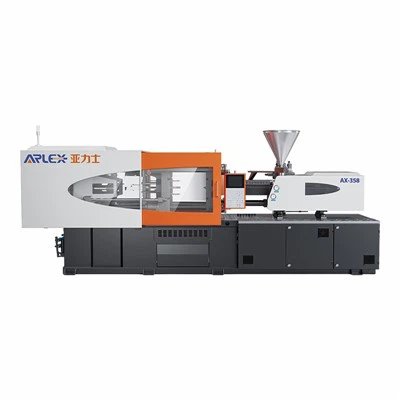
First, let’s ground this in what injection pressure actually is, specifically as it applies to optical frames, not just generic plastic molding. When you melt thermoplastic resin—most commonly TR-90 nylon, polycarbonate (PC), or cellulose acetate—for a frame, that melted plastic has to be forced into the tiny, detailed cavities of a mold. These cavities aren’t just the big outer shape of the frame; they have tiny features: the thin bridge that rests on your nose, the small hinge recesses for temple arms, the subtle curves that fit over an ear, and even micro textures for brand logos or anti-slip grip. Injection pressure is the force per unit area (usually measured in bar or psi, though we standardize on bar for our machines) that pushes that molten resin from the machine’s barrel, through the nozzle, into the mold runner system, and finally into the mold cavities.
Here’s where it’s easy for new frame makers to go wrong: they think “higher pressure equals better fill.” That’s not true for optical frames, and it’s a mistake that leads to wasted resin, scrapped molds, or finished frames that are brittle or have uneven flexibility. Let’s compare TR-90, the most popular material for lightweight, flexible frames, to polycarbonate, which is used for safety-focused or prescription high-index lenses integrated into frames. TR-90 melts at around 220–260°C, and its viscosity when molten is lower than PC’s, which means it flows more easily through thin mold features. That means TR-90 frames typically need an injection pressure of 50–80 bar. Polycarbonate, by contrast, has a higher melt viscosity and needs a higher pressure range: 80–120 bar, to push it into tight, thin mold details without leaving gaps. Cellulose acetate, another common material for premium, designer frames, falls somewhere in between, at 60–90 bar, because it’s more rigid than TR-90 but less viscous than PC.
Now, why is this pressure range non-negotiable? Let’s walk through the consequences of operating outside that sweet spot. If your pressure is too low, the molten resin won’t fully fill the mold cavities. You’ll end up with frames that have incomplete edges, thin spots that flex unevenly, or gaps in the hinge area that make assembling the temple arms impossible. For boutique frame makers, who often make small batches with unique mold details, this means wasting expensive custom resin and scrapping molds that cost hundreds or even thousands of dollars to mill. For example, a client of ours in Italy makes handmade acetate frames with embossed floral details on the front; when they first started using a generic injection molding machine, they set the pressure too low, and the embossments came out faint or missing entirely, leading them to rework every frame by hand for weeks, doubling their production time.
Too high a pressure is just as bad, especially for optical frames, which need to have consistent molecular structure to avoid brittleness. When you push molten plastic into the mold at too high a pressure, you’re forcing the molecules to align in a way that’s not natural for the material. For TR-90, which is designed to be flexible (it can bend 180 degrees and spring back without breaking), too high pressure causes the nylon molecules to stretch and orient unevenly across the frame, leading to frames that crack at the bridge after just a few wears— a death sentence for eyewear brands that rely on durability and customer satisfaction. We had a client in Southeast Asia learn this the hard way: they used a standard plastic molding machine set at 150 bar for their TR-90 frames, and within six months, 12% of their finished frames were being returned for cracking at the nose pads. We adjusted their machine’s injection pressure to 72 bar, exactly within our calibrated range for TR-90, and their return rate dropped to less than 1% overnight.
It’s also important to note that injection pressure isn’t a standalone number. It interacts with three other critical settings in the molding process: melt temperature, mold temperature, and injection speed. For example, if you raise the melt temperature of TR-90 by 10°C, you can lower the injection pressure by 5–10 bar, because the resin is thinner and flows more easily. If you set your mold temperature higher—say, 80°C instead of the standard 60°C for TR-90—you also reduce the pressure needed, because the mold is pre-heated so the resin cools slower and fills more smoothly. That’s why our optical frame machines have built-in calibrated pressure sensors and adjustable heat profiles, not one generic pressure setting. We’ve programmed our machines to save custom profiles for every popular optical frame material, so clients don’t have to guess at settings; they just select TR-90, standard frame design, and the machine automatically sets the optimal pressure, melt temp, and mold temp based on thousands of test runs we’ve done over the years.
Another common question I get: “Does injection pressure change for large frames vs. small frames?” The short answer is yes, but not as much as you might think. A large, oversized frame for men’s sunglasses has a larger cavity volume than a small cat-eye frame, so you need slightly higher pressure to push the resin across the longer distance of the mold. But that increase is minimal—usually 5–10 bar, not a huge jump. Where size makes a bigger difference is in runner systems: the channels that carry resin from the machine’s nozzle to the individual mold cavities. A mold with four cavities for small, matching frames needs a runner system that distributes pressure evenly across all four cavities; if you have uneven pressure in the runner, some frames will be over-injected and some under-injected. That’s why our optical frame machines come with pressure gauges that monitor cavity pressure directly, not just the barrel pressure at the nozzle. This is a feature you won’t find on generic plastic molding machines for toys or packaging, because toy makers often care less about consistency across multiple small parts, but optical frame makers need every single frame to be identical, regardless of size or batch.
Let’s talk about real-world examples from clients to make this concrete. Last year, we worked with a startup brand in the U.S. that makes blue-light blocking frames for gamers, using a lightweight TR-90 blend with UV protection. They had a custom mold made for their new line of wrap-around frames, and were using a basic molding machine they bought online, with a pressure setting of 110 bar. Their frames would warp after 24 hours of being worn, and their UV coating would peel off in thin strips. When they brought their mold to our facility to test on our machines, we adjusted the injection pressure to 75 bar, matched their material blend, and found that their mold’s runner system was slightly unbalanced. We calibrated our machine’s pressure to compensate for the unbalanced runner, and their test frames came out with zero warping, 100% consistent detail, and no coating issues. That startup is now using three of our machines to run 24/7, turning out 5,000 frames a month.
For premium acetate frames, which are a huge part of the designer eyewear market, injection pressure has an extra layer of importance. Acetate is a rigid material, and it’s often blended with pigments and modifiers to get unique, marbled or translucent colors. If pressure is too high when molding acetate, the pigments can separate, leading to streaks in the frame that are impossible to buff out. We had a client in France, a well-known designer brand, that was having issues with marbled acetate frames coming out with uneven color distribution. They had their machine set at 95 bar, and when we tested on our machine, we reduced the pressure to 82 bar, adjusted the injection speed to be slower for the first third of the fill (to let the pigments mix evenly before the rest of the resin hits the cavity), and the streaks disappeared entirely. The brand now uses our machines exclusively for all their acetate frame production.
You might be wondering why this matters for a supplier like me, beyond just selling machines. I’ve been in this industry for 12 years, and I’ve seen too many frame makers go out of business because they didn’t understand the nuances of injection pressure, not because their product was bad. Many new frame makers start by buying off-the-shelf molding machines meant for other industries, set whatever pressure makes the machine run, and end up with a product that can’t compete with well-made frames. My team and I don’t just sell machines; we provide training and support, because we know that a machine is only as good as the knowledge of the person using it. We walk clients through setting their injection pressure for their specific material and frame design, we troubleshoot when they get scrap frames, and we update our machine profiles as new materials come to market.
If you’re a frame maker, whether you’re a small boutique launching your first line or a large manufacturer scaling up production, injection pressure is not a technical afterthought—it’s one of the core factors that determines the quality, durability, and consistency of your frames. Set it too low, and you’ll have scrap and rework. Set it too high, and you’ll have brittle, return-prone frames. The right pressure, calibrated for your exact material and mold, will give you frames that look better, last longer, and keep your customers coming back.

If you’re looking to upgrade your molding process, reduce scrap rates, and get consistent, high-quality optical frames, our team can work with you to find the right machine, set up custom pressure profiles for your materials, and provide ongoing support to make sure your production runs smoothly. Don’t waste another hour troubleshooting pressure settings on generic equipment—let’s connect and talk through your needs.
Plastic Crusher References:
- Rosato, D. V., & Rosato, M. G. (2004). Injection Molding Handbook. Kluwer Academic Publishers.
- Harper, C. A. (2002). Handbook of Plastics, Elastomers, and Composites. McGraw-Hill.
- Optical Plastics: Materials and Processing for Eyewear Applications. (2018). Journal of Plastics Technology.
- Nunn, R. E. (2010). Precision Injection Molding for Medical and Optical Devices. Hanser Publications.
- Eyewear Manufacturing: Current Processes and Future Trends. (2021). International Journal of Fashion Technology.
Ningbo Yalishi (Arlex) Plastic Machinery Co., Ltd.
Address: No.63, Huangsu East Road, Industrial Zone, Dongqian Lake Tourist Resort, Ningbo, Zhejiang Province
E-mail: leo@arlex.cn
WebSite: https://www.arleximm.com/
