Hey everyone, it’s Mia from your local weed control fabric rolls supplier, and today I want to talk about something I get asked all the time by new landscapers, small farm owners, and even backyard gardeners reaching out to stock our rolls: Do weed control fabric rolls actually need pre-installation preparation? Weed Control Fabric Rolls
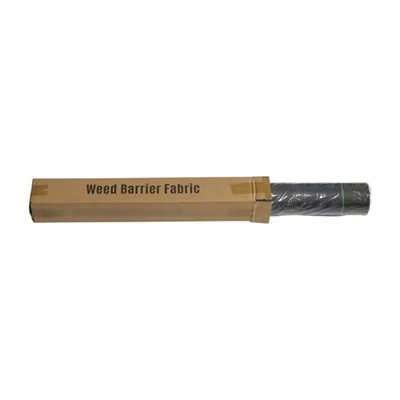
If you’re thinking of ditching the endless round of pulling weeds, yanking stubborn dandelion taproots, or wasting time on pre-emergent sprays that only work for a few weeks, I get the appeal of rolling out fabric and calling it a day. But after 7 years in this business, working side-by-side with installers from 1-acre community gardens to commercial property managers with 20+ acres of commercial landscaping, I can tell you the best weed control fabric rolls don’t work nearly as well if you skip prep work. And it’s not just my opinion—this is stuff we’ve tested on site after site, and what we’ve shared with customers who come back to us saying their fabric lasted 5 years versus the ones who skipped prep and had to re-do it in 12 months.
First, let’s clear up what weed control fabric actually does (and what it doesn’t do) because that’s the base of why prep matters. Our woven and non-woven fabric rolls are designed to block sunlight—weed seeds need that light to germinate—while letting water and nutrients pass through to your soil. It’s a physical barrier, not a magic shield. So if there’s already living weed matter on your soil when you lay the fabric, that’s a problem. A big one.
Let’s start with the first, most obvious (but most skipped) pre-install step: clearing all existing vegetation, roots, and debris from the area. I had a customer last spring who installed our 4-foot wide rolls along his driveway edge, then texted me a month later saying weeds were poking through like crazy. I drove out to take a look, and sure enough, he’d cut the grass along the edge with a weed whacker, left all the clippings (and the leftover dandelion roots and crabgrass runners) right there, then laid the fabric over the top. The grass clippings had already started breaking down, and the leftover weed seeds and small root pieces had already sprouted right through the fabric. That’s not a fabric issue—that’s a skip-the-prep issue.
Not all clearing is equal, either. If you’re dealing with a commercial site that’s previously been overgrown with blackberry brambles or thistles, cutting them down isn’t enough. Those deep taproots (some thistles have roots that go 10 feet down) will keep growing, and they’ll push right through even our heavy-duty 5-ounce woven rolls. I always tell customers to remove all root matter larger than the diameter of a pencil. For small garden beds, that means hand-pulling every dandelion, buttercup, and bindweed root you can find. For larger areas, a rototiller set to go 4 to 6 inches deep works great—just make sure you rake out all the loose roots and rocks afterward. Rocks might not sound like a big deal, but they’ll create an uneven surface under the fabric, leading to gaps where weeds can grow, or even tear the fabric if you’re walking or driving over it later.
Next up: soil conditioning and leveling. A lot of people think “soil prep” is just getting rid of weeds, but how you prep the soil itself makes a huge difference in how long your fabric lasts, and how well it works. Let’s say you lay fabric on soil that’s lumpy, has low organic matter, or is too compacted. Compacted soil is a big one. If you have hard clay or soil that’s been walked on for years, water won’t soak in as well, which means your plants (and any future weeds) might struggle. But also, when you roll fabric over compacted soil, the tension isn’t even—you might have tight spots where the fabric stretches, and loose spots where it sags a little. Saggy fabric is a disaster because that’s where water pools, which leads to mold, mildew, and even weed seeds getting trapped between the fabric and soil, leading to growth underneath.
Leveling is important too, especially for sloped areas like garden beds along hills or drainage ditches. If you lay fabric on uneven sloped ground, water will run along the fabric’s surface instead of through it, leading to washouts that can pull the fabric out of place, and even create gaps where weeds can take root. We’ve had customers who install our fabric for erosion control on slopes skip leveling, and a year later have to re-stretch the fabric because it slid down the hill. A quick rake to smooth out low spots and fill in small dips is all it takes here.
One step some people debate, and I’ve seen work for different projects: pre-treating with a non-residual herbicide (the “soft” kind, not the harsh stuff that stays in soil for years) before laying fabric. Wait, I know what some of you are thinking—“isn’t that counterproductive?” Let me explain. If you have an area that’s really overgrown, or you’re installing fabric in a place where you can’t hand-pull all roots (like a 10-acre hay field converting to a perennial garden), a pre-treatment of a selective herbicide that targets broadleaf weeds or grass (depending on what you’re removing) can kill all existing weeds, and since the fabric is going over it, there’s no chance the herbicide will affect future plants. The key here is to use a product that’s labeled for use with weed control fabric, and wait the required time (usually 2 to 4 weeks) before laying the fabric. I always tell customers to check the label—never just spray and roll. And for organic gardeners, a light layer of corn gluten meal (which stops weed seeds from germinating) works great too, as long as you don’t have existing weed seeds already in the soil.
Wait, what about if you’re installing fabric in areas where you have plants already growing? Like, say you’re adding fabric around your existing rose bushes or vegetable transplants? The same prep applies around those spots. You need to clear a 1 to 2 foot area around each plant, pull all weeds there, and make sure the soil is level before you lay the fabric and cut holes for your plants. I see people make the mistake of cutting a hole for a plant, then leaving weeds growing right up to the stem, which then spread under the fabric. That’s why we always include a free cutting template with every roll we sell, to help customers get clean, tight cuts that don’t leave gaps.
Another thing that’s part of pre-install prep that most people don’t talk about: checking the grade of your soil and drainage. Weed control fabric can’t stand standing water, period. If your area has poor drainage, even the best fabric will develop mold and start to break down prematurely. So before you lay anything, dig a small test hole in a few spots—if water pools in it after a rain, you need to add drainage material (like coarse gravel) under the fabric, or slope the area so water can run off. For commercial drainage ditches we work with, we recommend adding a 2-inch layer of gravel along the bottom before laying the fabric, which helps water pass through faster and prevents the fabric from getting waterlogged.
I want to be clear: I’m not saying you have to spend 3 days prepping your soil to lay fabric. For small, simple areas like a raised bed or a small patio edge, a half hour pulling weeds and raking smooth is enough. For larger commercial projects, yes, it takes a little more time, but that time saves you so much money in the long run. I had a commercial landscaper customer who installed our fabric rolls on a 5-acre commercial lot 3 years ago. He spent a full day prepping the soil, pulling all weeds, raking it smooth, and installing edging around the perimeter to hold the fabric in place. Last time I checked, he’s only had to pull weeds twice in 3 years, and his fabric is still in perfect shape. Compare that to another landscaper in the same town who skipped prep, laid fabric, and has had to re-do half the lot every year because weeds are growing through.
Let’s bust a common myth here: some customers ask me, “Can’t I just lay fabric on top of grass, no prep needed?” I get it, that seems like the easiest way. But grass will continue to grow under the fabric, and once it’s thick, it pushes through. Even non-woven fabric isn’t thick enough to stop live grass roots from growing through. I’ve seen it happen dozens of times—you lay fabric over grass, then 6 months later, the grass has grown through the seams and holes, and you have to pull the whole thing up and start over. It’s never worth the shortcut.
What about when you’re laying fabric over existing mulch? A lot of people want to put mulch on top of the fabric, which is great for aesthetics, but if you leave old mulch that has weed seeds in it on the ground under the fabric, those seeds will germinate and grow. So you have to clear all old mulch first, then prep the soil, then lay the fabric, then add new mulch on top. That’s the right order—trust me, I’ve had customers call me saying their mulch is full of weeds, and it’s almost always because they skipped clearing old mulch first.
Now, I know some of you are worried about the time and cost of pre-install prep. Let’s put it in perspective. Our weed control fabric rolls are priced affordably, especially compared to the cost of labor to pull weeds year after year. The prep work is an investment in how long the fabric lasts. For example, our heavy-duty woven fabric is rated for 5 to 7 years with proper prep, but only 1 to 2 years if you skip prep. That means you’re paying for fabric every year versus paying once and getting 5 years out of it. That’s a no-brainer for most folks.
I also want to mention that different types of areas need different prep. If you’re installing fabric in a vegetable garden, you have to be extra careful not to leave any herbicide residue, so hand-pulling weeds or tilling (and raking out all roots) is the way to go. If you’re installing fabric in a dry, sunny area like a xeriscaping bed, you might not need to till as much, just pull all weeds and smooth the surface, since the dry soil won’t hold as many weed seeds. For areas near trees, you have to avoid digging too deep near the roots, so we recommend pulling weeds by hand and raking lightly around the base of the tree to prevent damaging the roots.
At the end of the day, the question isn’t “Do weed control fabric rolls require pre-installation preparation?” It’s “How much pre-installation preparation do they require to work correctly?” And the answer is: a little bit, but it’s worth every minute. I’ve been selling these rolls for long enough to know that the customers who take the time to prep their soil end up being the happiest, because they spend less time weeding and more time enjoying their gardens, lawns, or properties.

If you’re ready to order weed control fabric rolls for your next project, and you have questions about prep, or what type of fabric is right for your area, don’t hesitate to reach out. We’re here to help you every step of the way, from choosing the right roll to walking you through the prep process.
Machine Stretch Film References
- USDA Natural Resources Conservation Service. (2020). Weed Control Practices for Agricultural and Urban Landscapes. U.S. Department of Agriculture.
- American Society of Landscape Architects. (2021). Specifications for Landscape Ground Cover Materials. ASLA Press.
- University of California Agriculture and Natural Resources. (2022). Weed Management in Home Gardens and Landscapes. UC ANR Publication 8005.
- International Organization for Standardization. (2019). Textiles for Geosynthetic Applications: Specification for Weed Control Fabrics. ISO 10318:2019.
- Weed Science Society of America. (2020). Physical Barriers for Weed Suppression in Ornamental Horticulture. WSSA Journal of Weed Science.
Linyi Dongyi Import&Export Co., Ltd.
As one of the most professional weed control fabric rolls manufacturers and suppliers in China, we offer a wide range of products with superior quality. We warmly welcome you to wholesale bulk customized weed control fabric rolls from our factory. If you have any enquiry about quotation, please feel free to email us.
Address: 4 F, Zone A, Zhangjia Zhuxu Village, Lanshan District, Linyi City.
E-mail: donglai01972@gmail.com
WebSite: https://www.donglaipack.com/
