If you’ve ever been zipping along a highway only to hit a big, bold detour sign and think, “Wait, what exactly is this telling me—and do I have to follow it right now?” you’re not alone. I’ve worked in the traffic signs supply game for over a decade, and I can’t tell you how many times I’ve heard confused drivers grumble about detours like they’re just a random, annoying roadblock meant to ruin their day. But here’s the thing: those signs aren’t just random—they’re carefully designed, coded, and placed for one really big reason: to keep traffic safe and moving when normal routes can’t. Traffic Signs
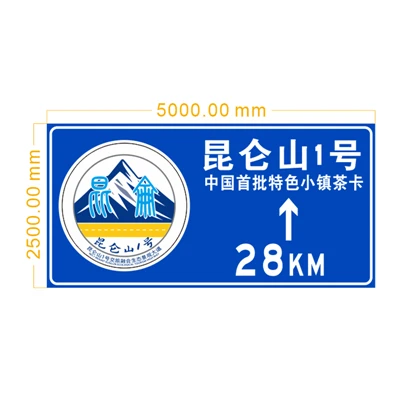
First off, let’s break down what a detour sign actually is, from a technical standpoint (no stuffy textbook jargon, promise). Most people know them as the big, rectangular signs with that bright orange background and black lettering, right? Wait, not all, actually. Urban areas might use slightly different styles, like sometimes a white background with red lettering, but the core purpose never changes. From a traffic engineering angle, a detour sign falls under a category called “temporary traffic control devices (TCDs)” — these are the signs, cones, and barricades that only show up when there’s a change to the usual road layout: think road construction, utility work like fixing a broken water main, a crash that’s blocking lanes, or even a big event like a parade that closes a whole street for a few hours.
But here’s the part I get asked all the time: when you spot a detour, is it a suggestion or a rule? That’s way more important than you might think. A lot of drivers pass those signs like they’re just a recommendation, and end up cutting through residential neighborhoods or backing up the highway for miles because they thought they knew a better way. Nope. Detour signs are regulatory in most cases—meaning ignoring them is the same as running a stop sign or speeding. The Federal Highway Administration (FHWA) actually lays this out in the Manual on Uniform Traffic Control Devices (MUTCD), which is the rulebook for every sign you see on roads across the U.S. So that sign isn’t just a suggestion: it’s telling you, “The road ahead you were planning to use is closed for X reason, follow this path to get to where you need to go without getting stuck or causing an accident.”
Let’s get more specific about what a detour sign actually indicates, because not all detours are created equal. You’ve got a few common types, and each sign tells you a different level of urgency and route change. For example, if you see a sign that says “ROAD CLOSED – DETOUR” with an arrow pointing right, that’s the most straightforward one: the specific road segment ahead is totally shut down, no exceptions. You can’t drive around it even if you wanted to—because it’s either dug up for construction, blocked by a downed tree, or closed for emergency repairs. Then there’s the “PARTIAL DETOUR” sign, which means only a lane or one direction of the road is closed, so you don’t need to leave the main highway, just shift to the other side. That one’s way less disruptive, but still important to follow so you don’t cross into closed work zones and get in the way of crews.
Another big one: the detour route sign. These are the signs that show up after the initial detour warning, with little arrows and sometimes even a tiny map snippet, telling you exactly how to follow the detour back to the original road. I’ve worked with cities that forget to stock enough of these, and the result is chaos: drivers end up lost, circling the same blocks, and even creating new hazards by pulling over abruptly or ignoring side streets. From our end as a traffic signs supplier, we make sure to print these with high-contrast lettering and reflective material, because at night, you need to see them from at least a quarter mile away—no one has time to squint at a faded sign when they’re going 60 mph.
Wait, let’s talk about the orange background for a second—why orange? That’s not a random color pick. The MUTCD says orange is specifically for temporary traffic control devices because it’s way more visible than white or yellow when you’re in a work zone or around unexpected changes. Studies (I can point you to the FHWA’s reports on this, if you’re curious) show that orange grabs a driver’s attention faster, which is critical when you have to react quickly to a closed road. I still remember early in my career, we had a client who wanted to use red for detour signs because they thought it looked “more urgent” — we talked them out of it, because red is reserved for stop signs, and drivers already associate red with “stop” or “danger,” not a temporary reroute. Orange is the sweet spot, because it signals “pause, slow down, there’s a change coming.”
Now, let’s address the confusion around “when does a detour sign apply?” A lot of drivers see a detour sign for a road they never use, so they think “that doesn’t apply to me” and keep going straight. Big mistake. If the sign is posted on the road you’re currently driving on, it applies to you, even if you only use that road for a small stretch. For example, if you’re driving on a local street that connects to a highway, and there’s a detour sign closing the highway entrance, you can’t just turn around and go another way—well, you can, but that’s what the detour is for. The sign is there to make sure all traffic gets rerouted safely, so you don’t end up in a dead end or a neighborhood with no through access.
I’ve also seen what happens when detour signs are placed wrong. A few years back, we supplied signs for a construction project in a mid-sized city, and the crew installed the detour arrows backwards on one block. By the time we got a call to come fix it, there were 12 cars stuck in a residential cul-de-sac, and a construction truck had to back up a half mile to avoid hitting a parked car. That’s the kind of mess that could’ve been avoided if the signs were installed correctly and clearly indicated where traffic needed to go. That’s why we don’t just sell signs—we work with cities and contractors to make sure they understand not just what the signs mean, but where to put them, so the detour works as intended.
Another thing people miss: detour signs also indicate the expected timeline for the closure. Okay, most of them don’t say “closes at 9 a.m. on Tuesday” (though some do, for planned work), but the size and location of the detour usually gives a clue. A small detour sign for a single lane might mean the road is closed for a few hours for pothole repair, while a big, permanent-looking detour around a whole neighborhood means the road is being repaved for a few days. That’s why we make signs in different sizes too—small for short-term, minor closures, large for long-term, major reroutes.
Wait, let’s get back to the core question: what does a detour sign actually indicate, in plain terms? Let’s sum it up, from someone who sees these signs every single day: It indicates that the route you’re on is unavailable (for any number of reasons), you need to follow the signed path to avoid getting stuck, and ignoring it isn’t just rude—it’s against the rules, and could lead to a ticket or an accident. It’s not a random inconvenience; it’s a safety measure.
Now, if you’re a city planner, a construction company, or someone who needs to set up temporary traffic control for an event or project, you know how important it is to have the right signs, the right materials, and the right instructions for placement. I’ve worked with all kinds of clients over the years—from small towns doing a road resurfacing to big highway projects for state departments of transportation—and one thing I can tell you is: skimping on detour signs is never worth it. Faded, small, or missing signs lead to chaos, delays, and even injuries. That’s why we make our signs with heavy-duty, weather-resistant material, high-intensity reflective coating (so they’re visible in rain, fog, or at night), and follow all MUTCD guidelines, so they do exactly what they’re supposed to do: keep traffic moving safely.
I’ve heard too many drivers say things like “detours are just a way to mess with my commute” and I get it—no one wants their drive to work longer. But at the end of the day, those signs are there because the road you want to take isn’t safe to use. Whether it’s a bridge with cracked support beams, a sewer line that collapsed, or a crew working to fix a pothole that could blow out your tire at 55 mph, the detour sign is your heads-up to go a different way, for your own safety. If you follow it, you’ll get to your destination faster than if you try to cut around and end up stuck in a traffic jam or worse.
If you’re in the market for reliable traffic signs—whether it’s detour signs, temporary barricades, work zone signs, or anything else for a construction project, city road work, or special event—we’ve got you covered. We’ve been doing this for years, and we know how critical it is to have signs that are clear, compliant, and built to last. Don’t settle for cheap, flimsy signs that might not hold up to rain or wind. Let’s chat about what you need, and make sure your detour (or any traffic control setup) works exactly as it should to keep people safe.
Guardrail Posts References
Manual on Uniform Traffic Control Devices. Federal Highway Administration, U.S. Department of Transportation.
High-Visibility Temporary Traffic Control Devices: Effectiveness for Driver Perception and Compliance. Federal Highway Administration, Office of Safety.
Guanxian Hongrong Traffic Facilities Co., Ltd.
As one of the most professional traffic signs manufacturers and suppliers in China, we also support customized service. Please feel free to wholesale bulk durable traffic signs in stock here from our factory. Welcome to contact us for quotation.
Address: South side of the road, 100 meters west of the intersection of Baiyang Road and Donghuan Road, Chongwen Subdistrict, Guan County, Liaocheng City, Shandong Province
E-mail: hongrongli568@163.com
WebSite: https://www.hongrongguardrail.com/
